 Canada
 United States
 Bahamas
 Jamaica
 Trinidad & Tobago
 Antigua & Barbuda
 Barbados
 Anguilla
Record of Employment Canada: The Late-ROE Penalty

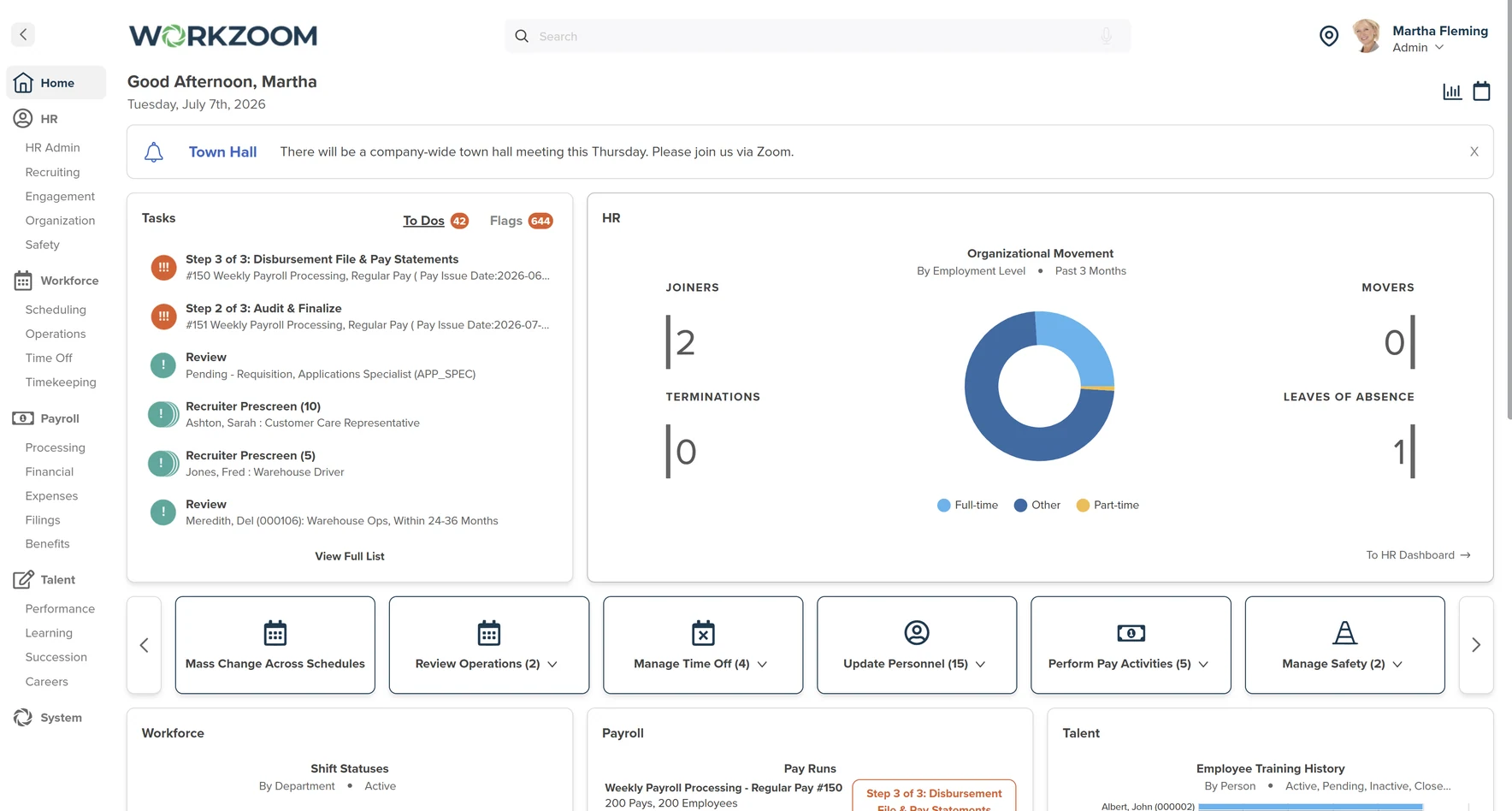
An ROE deadline can arrive before the final payroll review is complete. Confirm the interruption date, pay period, earnings and hours early enough to file the correct record.
A Record of Employment (ROE) is a form Canadian employers issue when an employee has an interruption of earnings. It gives Service Canada information used to assess an Employment Insurance claim. The filing deadline depends on the filing method and pay period. See Service Canada's ROE guide for the current rule.
Service Canada provides ROE Web for electronic filing. Do not assume that a threshold from another filing program applies to ROEs. Follow the current ROE guide for the filing method and deadline that apply to your organization.
What Is a Record of Employment in Canada?
The ROE is Service Canada's form for tracking employment history. It captures how long someone worked, how much they earned, and why the interruption occurred. The reason code must accurately describe the situation. Service Canada, not the employer's code alone, decides EI entitlement.
The reason code describes the interruption. It is part of the evidence Service Canada uses, alongside the claimant's circumstances, to assess benefits. Record the facts and let Service Canada make the entitlement decision.
Employers issue ROEs for qualifying interruptions involving insurable employment, and when Service Canada requests one. Check the guide for insurability and special situations.
When You Actually Need to File One
An ROE isn't only for terminations. You need to file one any time there's an interruption of earnings. An interruption of earnings occurs when an employee has had or is anticipated to have 7 consecutive calendar days with no work and no insurable earnings from the employer. It also occurs when an employee's salary falls below 60% of their regular weekly earnings and the separation is due to illness, injury or quarantine, pregnancy, parental leave, or providing care or support to a critically ill or injured family member, and whenever an employee starts receiving wage loss insurance payments.
That covers a lot of situations people don't think about:
- Termination (with or without cause)
- Layoff (temporary or permanent)
- Resignation
- Maternity or parental leave
- Illness or injury leave
- Retirement
- Leave of absence (unpaid)
- Strike or lockout
- Seasonal work ending
- Return to school
The seasonal one catches employers every year. A resort that shuts down for four months in the off-season? That's an ROE for every seasonal worker. A ski resort running 400% headcount swings between peak and off-season? They might be filing hundreds of ROEs in a single week.
And here's the part that frustrates payroll teams: the earnings-drop trigger above can apply even when someone is still technically employed, not just when the paycheques stop outright.
The Deadline Nobody Has Patience For
An employer filing a Record of Employment electronically on a weekly, biweekly or semi-monthly payroll must issue it within 5 calendar days after the end of the pay period in which the employee's interruption of earnings occurs. On a monthly payroll, or a payroll with 13 pay periods a year, the deadline is the earlier of 5 calendar days after the end of that pay period or 15 calendar days after the first day of the interruption of earnings. An employer issuing a paper Record of Employment must issue it within 5 calendar days of the first day of the interruption of earnings, or of the day the employer becomes aware of the interruption, whichever applies. Calendar days, not business days, on the electronic side. For an electronic weekly, biweekly or semi-monthly ROE, a Wednesday period end generally produces a Monday deadline. Monthly, 13-period and paper ROEs require the separate deadline check above.
Paper and electronic ROEs follow different rules. Use the current ROE guide rather than importing a filing threshold from another program.
Five days doesn't sound unreasonable until you factor in what needs to happen. Someone in HR confirms the last day worked. Payroll calculates the final insurable earnings and hours. The reason code gets determined. If the termination was contentious, there might be a back-and-forth about whether it was Code M (dismissal) or Code E (quit). Meanwhile the clock is running.
The five-day window assumes your HR and payroll data live in the same place. When they don't, five days is actually two days of chasing information and three days of hoping you got it right.
Insurable Hours and Earnings: Blocks 15A, 15B and 15C
Block 15A is total insurable hours, Block 15B is total insurable earnings, and Block 15C is insurable earnings by pay period. The number of periods required depends on pay frequency and the block. Use Service Canada's block-by-block instructions to set each reporting window and allocate special payments. Variable hours do not let an employer substitute a separate calendar-week reporting method.
| Block | Payroll information |
|---|---|
| 15A | Total insurable hours |
| 15B | Total insurable earnings |
| 15C | Insurable earnings by pay period |
| 17 | Separation payments, using each sub-block's instructions |
Reason Codes: Getting the Letter Right
Block 16 records the reason for issuing the ROE. Choose the code that accurately describes why the interruption occurred. An incorrect code can require correction and delay processing, but it does not decide the employee's EI entitlement.
Neither outcome is good for you.
The most commonly used reason codes:
- Code A - Shortage of work / End of contract or season
- Code D - Illness or injury
- Code E - Quit
- Code F - Maternity
- Code K - Other (requires explanation in Block 18)
- Code M - Dismissal or termination
- Code N - Leave of absence
- Code P - Parental leave
For a disputed resignation or dismissal, document what happened before choosing E or M. Service Canada may seek information from both parties.
And look, there's a real human cost here that goes beyond paperwork. Someone who just lost their job and needs EI to make rent shouldn't have to wait an extra three weeks because their former employer picked the wrong letter. Get the code right the first time.
Filing Electronically Through ROE Web
Service Canada's ROE Web portal supports electronic ROE filing. Confirm the filing method and timing in the current ROE guide before setting an internal deadline.
ROE Web lets you:
- Create, submit, and amend ROEs online
- Save drafts and templates for recurring patterns
- View previously submitted ROEs
- Receive confirmation numbers immediately
- Set up multiple authorized users per business number
The portal works. It's functional. It's also clearly a government system that was designed in a different era and has been patched rather than rebuilt. If you're filing 10 ROEs a year, it's fine. If you're filing 200, you'll want your payroll system generating them automatically and transmitting via the ROE Web API.
Most modern payroll platforms can connect directly to ROE Web and auto-populate the form from your payroll data. That eliminates the manual data entry that causes most errors. The insurable earnings come straight from your pay records. The hours come from your time tracking. The reason code is the only field that still needs human judgment.
Penalties: Not a Bluff
Failing to issue an ROE contravenes the Employment Insurance Act, which makes it an offence under the Act. Failing to issue an ROE is an offence under the general EI Act penalty: $100 to $2,000 or up to six months in jail, or both. That is a general offence provision with a fine range, not a fixed dollar amount stacked per ROE; confirm the current wording directly with the Employment Insurance Act or your Service Canada correspondence before budgeting around it.
Do the math on the exposure, not the figure. A company with 150 employees that has 20 departures in a year and files every ROE a week late is not looking at a rounding error. You won't get it wrong. You will get it late.
Do not assume a warning will precede enforcement. Follow the filing obligation and respond to Service Canada requests using the facts of the case.
Timely and accurate records help Service Canada process benefits. Keep responsibility for preparing, reviewing and submitting each ROE clear.
Five ROE Checks Before Filing
Use these checks alongside the official ROE guide before submitting.
1. Wrong Insurable Hours (Block 15A)
Insurable hours aren't always the same as hours worked. Paid vacation leave, paid sick leave and paid statutory holidays can generate insurable hours under the applicable allocation rules. A vacation payout is not automatically equivalent to hours of leave taken. If your time tracking system only captures hours physically worked, your ROE will undercount, and your employee may not qualify for EI benefits they're entitled to.
2. Missing the Interruption Trigger
An employee goes on unpaid leave and nobody files an ROE because they're "still employed." Technically correct. But once the interruption-of-earnings trigger described above has been met, an ROE is required regardless. This happens constantly with leave management that isn't integrated with payroll.
3. Incorrect Final Pay Period Earnings
Report separation payments using the guide's Block 17 instructions and Annex 1. Vacation pay belongs in Block 17A, statutory holiday pay in 17B, and other separation amounts in 17C. Some payments also belong in insurable earnings in Blocks 15B and 15C. Determine insurability and allocation by payment type rather than excluding every separation payment from Block 15.
4. The E vs. M Reason Code Gamble
We covered this above, but it's worth repeating because it causes so many disputes. When the departure is ambiguous, document the circumstances before choosing the code. "I think they quit" is not documentation. Service Canada wants specifics, and they'll ask.
5. Not Amending When You Should
An amended ROE is required when previously reported information must be corrected or updated, including later amounts that affect the record. Use Service Canada's amendment instructions and retain the supporting payroll calculation.
What This Looks Like When HR and Payroll Share One System
When HR and payroll share one employee record, the termination date and final insurable earnings already exist the moment someone leaves. The system generates the ROE from that data, the payroll team reviews it, confirms the reason code, and submits to Service Canada through ROE Web. No re-keying. No reconciliation between two sets of records. That is the difference between a five-day deadline you make comfortably and one you scramble against.
For multi-entity and seasonal employers, track each entity's interruptions and reconcile hours and earnings to its payroll records. Apply the governing employment standards to final pay separately from the Service Canada rules for ROE insurability and allocation.
Making ROEs Less Painful
The honest truth is that ROE filing will always require some attention. It's a compliance obligation, and compliance obligations don't eliminate themselves. But the difference between a 45-minute manual process per ROE and a 2-minute review-and-submit process is enormous when you multiply it across a year.
Here's what reduces ROE pain in practice:
- Single system for HR and payroll. When the termination date, last day worked, insurable earnings, and insurable hours all live in the same database, the ROE practically writes itself. When they live in separate systems, you're reconciling spreadsheets every time someone leaves.
- Automated interruption detection. Your system should flag when an employee hasn't had earnings for seven days and prompt you to file an ROE. Not wait for someone to remember.
- Direct ROE Web integration. Filing should be a button click from within your payroll system, not a separate login to a government portal where you re-enter everything by hand.
- Reason code documentation. Build a habit of recording the departure reason in the employee's record at the time of the event, not three days later when you're trying to file the ROE under deadline pressure.
The ROE system is showing its age. It was designed for a world where most employment was straightforward: you worked somewhere, you stopped, you filed for EI. Today's workforce has contract workers cycling in and out, seasonal employees returning every year, remote workers crossing provincial lines, and parental leaves that span 18 months. The form hasn't caught up. But the penalties assume you have.
That gap between the system's simplicity and the workforce's complexity is where most ROE errors live. And until Service Canada modernizes the process, the best defence is making sure your payroll data is clean, connected, and ready to go before the five-day clock starts ticking.
If your current system cannot produce the ROE from the payroll record on the last day worked, that is worth a 30-minute walkthrough.
- Employers: How to complete the record of employment (ROE) form claim checked Sep 4, 2026
- Employers: How to complete the record of employment (ROE) form claim checked Sep 4, 2026
- Employment Insurance Act, RSC 1985, c 23 (1st Supp) [S.C. 1996, c. 23] -- ss 136-137 claim checked Sep 4, 2026 also Employment Insurance Regulations, SOR/96-332, s 19
See Workzoom in 30 minutes.
Real product, real questions, no slides. Starts at $4 per employee per month, CAD or USD, with $0 setup fees.
What readers ask after this post on record of employment Canada.
Our clients
The teams that run their people on Workzoom.













Workzoom handles HR, payroll, workforce, and talent on one employee record. Book a 30-minute walkthrough.