 Canada
 United States
 Bahamas
 Jamaica
 Trinidad & Tobago
 Antigua & Barbuda
 Barbados
 Anguilla
HR Software ROI: Why Finance Defers, Not Rejects, Your Case

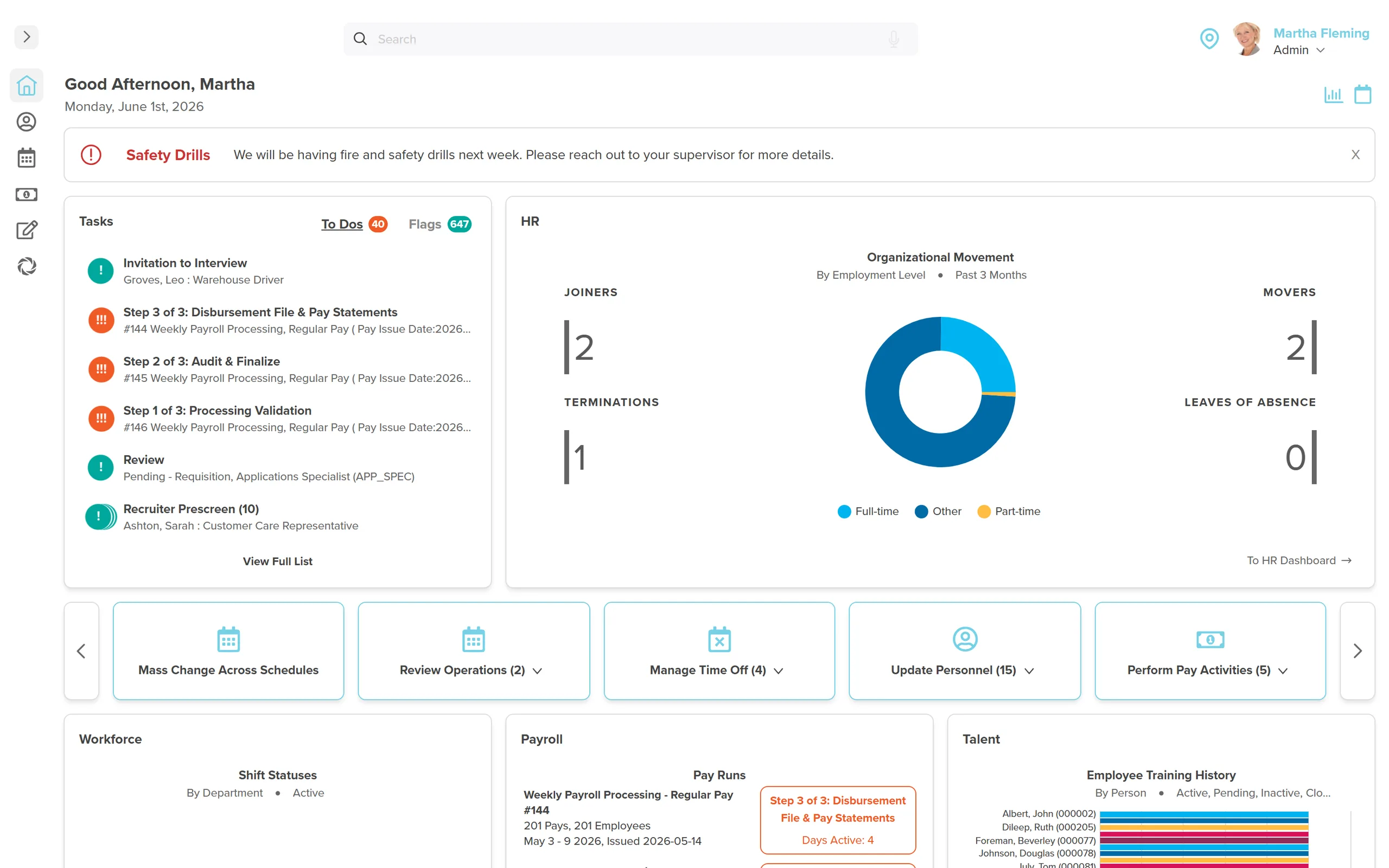
Your case didn't get rejected last cycle. It got deferred, which is worse. Finance liked the idea and still couldn't sign it, so here you are, rewriting the same deck for round two.
Here's why. HR software business cases get rejected for one reason: they pitch saved time, not the dollar cost of the fragmentation finance is already funding. "Saves the team ten hours a week" plays well in a meeting. It isn't a line item a council can vote on.
You got into HR to build people programs, not to reconcile three systems that don't talk to each other. That's not a personal failing. It's what your current software was never built to do. But it means the business case you write has to do the job automation should already be doing: put a dollar figure on what's already broken.
The HR software ROI that survives a CFO or council review isn't a time-savings story. It's a dollar figure: turnover priced at a salary multiplier, manual hours priced at loaded wage, and the compliance exposure sitting inside a system nobody fully trusts. Finance approves numbers with a payback period. It defers stories about efficiency.
- Only 43% of HR professionals rate their own HR tech as effective, per SHRM. That's the room you're pitching to.
- Finance scores any software ask on ROI percentage, payback period, net present value, and three-year total cost of ownership, not team happiness.
- Employee replacement runs 50% to 200% of annual salary (Gallup). Gallup puts 42% of voluntary turnover as preventable.
- Cable Bahamas cut its payroll close from 5 days to roughly 1.5, running payroll for about 850 employees with a 3-person team.
Why Your HR Software Business Case Got Deferred
Only 43% of HR professionals rate their own organization's HR technology as effective, per SHRM's 2025 State of the Workplace Report. You're not pitching skeptics who love the status quo. You're pitching a room half-convinced the current system is fine, because nobody's shown them what it costs to keep.
So the deferred version usually reads like a features list wearing an ROI costume: fewer clicks, happier managers, one login. Probably true. Unbudgetable, definitely.
What Numbers Justify HR Software Cost to a CFO?
CFOs and council finance committees size up a software purchase the same way, whether it's a payroll platform or a new bridge. Per business case research from Treegarden, that means four things:
- ROI percentage: the return relative to spend, not team mood.
- Payback period: many HR teams report payback within the first year, driven by hours reclaimed from manual reconciliation.
- Net present value: what the savings are worth today, not spread thin across five hopeful years.
- Three-year total cost of ownership, including the cost of doing nothing.
Employee satisfaction and "modernizing HR" aren't on that list. They're real reasons to buy software. They're not what gets a line item approved.
Pricing the Fragmentation You're Already Funding
Every employer running a payroll system bolted to a separate HR spreadsheet is already paying for that fragmentation. It just doesn't show up as a line item. It shows up as turnover, overtime errors, and a compliance gap nobody notices until an audit finds it.
Start with turnover, the easiest number to defend. Gallup puts the cost of replacing an employee at 50% to 200% of annual salary. Gallup research (updated 2026) puts 42% of voluntary turnover as preventable. In 30% of those cases, the fix was pay or benefits, something your current system never flagged in time. Multiply your turnover rate by your average salary and that percentage. That turnover cost is already on the CFO's spreadsheet somewhere, just unlabeled.
Then price the manual hours nobody logs. Manual punch clocks hide their own time theft cost, and it compounds fast in hourly shops. (See what buddy punching actually costs Canadian employers.)
And price the compliance gap. Federally regulated employers face Pay Equity Act penalties up to $30,000 for employers with 10 to 99 employees, or up to $50,000 for employers with 100 or more employees, per violation, with first annual statements due June 30, 2025. A system that can't produce that report on demand isn't a convenience gap. It's a liability. Full stop.
Source: Cable Bahamas payroll team size case study, 2024
That's the comparator finance wants: an organization your size running payroll with a third of the headcount you're paying to reconcile it by hand, not a claim that software is nice.
"We wouldn't be able to hire the people that we do anymore with the same resources we already had."
Greg Belmore, HR Manager, County of Renfrew
That's a headcount argument, not a happiness argument. Renfrew onboarded 32 people in one pay period without adding staff. If council is worried about hiring volume outrunning headcount, that's the sentence that survives the meeting.
Timing HR Software Budget Approval to Your Fiscal Cycle
Most pitches die of timing before they die of math. Lock capital asks in Q3 and bring your case in Q1, and you've built next year's budget, not this year's.
Two fixes. Phase the ask by suite instead of the full platform. At $4 to $16 per employee per month, a single-suite start often falls under the threshold that triggers a full RFP, buying speed this year and a track record for next. Bring back last cycle's deferred number with a dollar figure attached this time. Councils remember what got tabled. The same ask minus the vague language is a faster yes than starting over.
One trap hides inside the phased-ask advice: buying whichever suite is cheapest instead of the one causing the most damage. Payroll usually wins that argument. Not because it's flashy. Because that's where the errors get expensive fastest. Whichever suite you lead with, bring the calendar, not just the case.
The One-Page Case Finance Approves Without a Follow-Up Meeting
The version that gets approved on the first pass fits on one page and swaps four phrases.
| Deferred pitch language | Approved pitch language |
|---|---|
| "Saves HR 10 hours a week" | "Recovers $X in loaded wage hours spent re-keying data across two systems" |
| "Improves employee experience" | "Reduces the preventable share of a $Y turnover cost tied to a specific role" |
| "Modernizes HR" | "Closes a compliance gap carrying a $30,000-$50,000 penalty per violation" |
| "One system for everything" | "6-12 month payback, phased at $4/employee/month starting with one suite" |
The pattern underneath all four rows is the same: automation, not adoption. You're not asking for a nicer interface. You're asking to remove the manual step between two systems where the missed deduction, the late filing, or the re-keyed error actually gets created. That's the case: stop paying, by hand, for what a connected system already does for $4 a month. Not "buy new software."
For the fuller picture, see what bad onboarding actually costs and whether a PEO or HR software fits your headcount better.
Bring last cycle's deferred pitch to a walkthrough
Workzoom runs HR, payroll, workforce, and talent on one employee record, starting at $4 per employee per month per suite, with no setup fees and no contract. Bring the numbers your CFO flagged last time and we'll show you where they land.
Book a 30-Minute Discovery CallSee Workzoom in 30 minutes.
Real product, real questions, no slides. Starts at $4 per employee per month, CAD or USD, with $0 setup fees.
What readers ask after this post on HR software roi.
Our clients
The teams that run their people on Workzoom.













Workzoom handles HR, payroll, workforce, and talent on one employee record. Book a 30-minute walkthrough.