 Canada
 United States
 Bahamas
 Jamaica
 Trinidad & Tobago
 Antigua & Barbuda
 Barbados
 Anguilla
HR Tech Vendor Selection and the Strategic Partner Test

Guest article by Steve Goldberg, independent HR technology analyst and advisor. Originally published on Workzoom's LinkedIn.
A fortunate lesson learned early on
Successful HCM / HR Tech, or any other enterprise software deployments, tend to be much more associated with experienced corporate teams, accountable managers with deep domain experience, and highly reputable consultants. As it turns out, my very first opportunity to lead an HCM / Payroll system implementation had very few of those elements in place, maybe except for viewing myself as an accountable manager that, while not overly seasoned, still took my portfolio of responsibility quite seriously. The fact is that the CHRO of a 6,000-employee brokerage house on Wall Street placed his confidence in me early on in my career, and I was not about to take that responsibility lightly. I thought long and hard, albeit surrounded by more tenured domain experts than myself, about the best process we should use for vendor selection.
One thing the team and I concluded quickly was that we were going to investigate and discover everything we could about HR technology vendor selection "best practices" even during those (believe it or not) pre-internet days. By the time this intensive six to eight week exercise was wrapped up, we realized that best practices were simply the practices that would work best, for us. In other words, these would have to closely reflect, and ideally be designed for, the key elements characterizing our unique operating environment. Of course, this meant lots of face-to-face meetings with organizations that would be generous with their time and lessons learned.
We also determined that what would truly serve our mission well was having a solution provider committed to being our "strategic partner" in every sense of that phrase. Surely, we would have received few if any complaints from senior management, our internal customers, or other stakeholders if we simply went with a well-established, highly regarded software vendor focused on our areas of need. In the end, however, we were successful because our HCM / Payroll solution provider had the same exact perspective on what having a strategic partner for our business-critical software implementation was all about.
Indeed, it came down to three factors: Being 100% aligned on how we each defined a "successfully deployed new system", including the reliance on such metrics as universally high system usage, logically emanating from a very intuitive system design and high end-user satisfaction, as well as a measurable improvement in perceived business value derived when compared to the previous HCM / Payroll system used. And we were also aligned on what constituted an acceptable "elapsed time to tangibly realize" that value. We knew these were all dependent on the new system featuring a low-complexity user experience coupled with all the critical functionality we conveyed during the evaluation and discovery phases of our project. Moreover, we needed to be aligned with the chosen HCM vendor as far as being guided by these aspects vs. the oft-used litmus test of "did we go live with no major issues?" Finally, we were in lockstep with our selected HCM / Payroll vendor on the fact that platform attributes such as interoperability, configurability, usability and scalability were much more important to emphasize than slick features, particularly since the latter, even back then, took much less time to add than the time needed to noticeably improve upon platform attributes.
Bottom line, our strategic partner blueprint was absolutely a critical success factor in our very strategic initiative's success; and frankly, it's also been a major dynamic in every one of my subsequent engagements, including throughout my industry advisor years. As a postscript to this context up front, that first enterprise HCM software vendor I worked closely with from the customer side was subsequently acquired by CompuServe, which was acquired by Geac Computer Corporation, also later acquired.
Same lesson reinforced during my industry analyst and influencer years
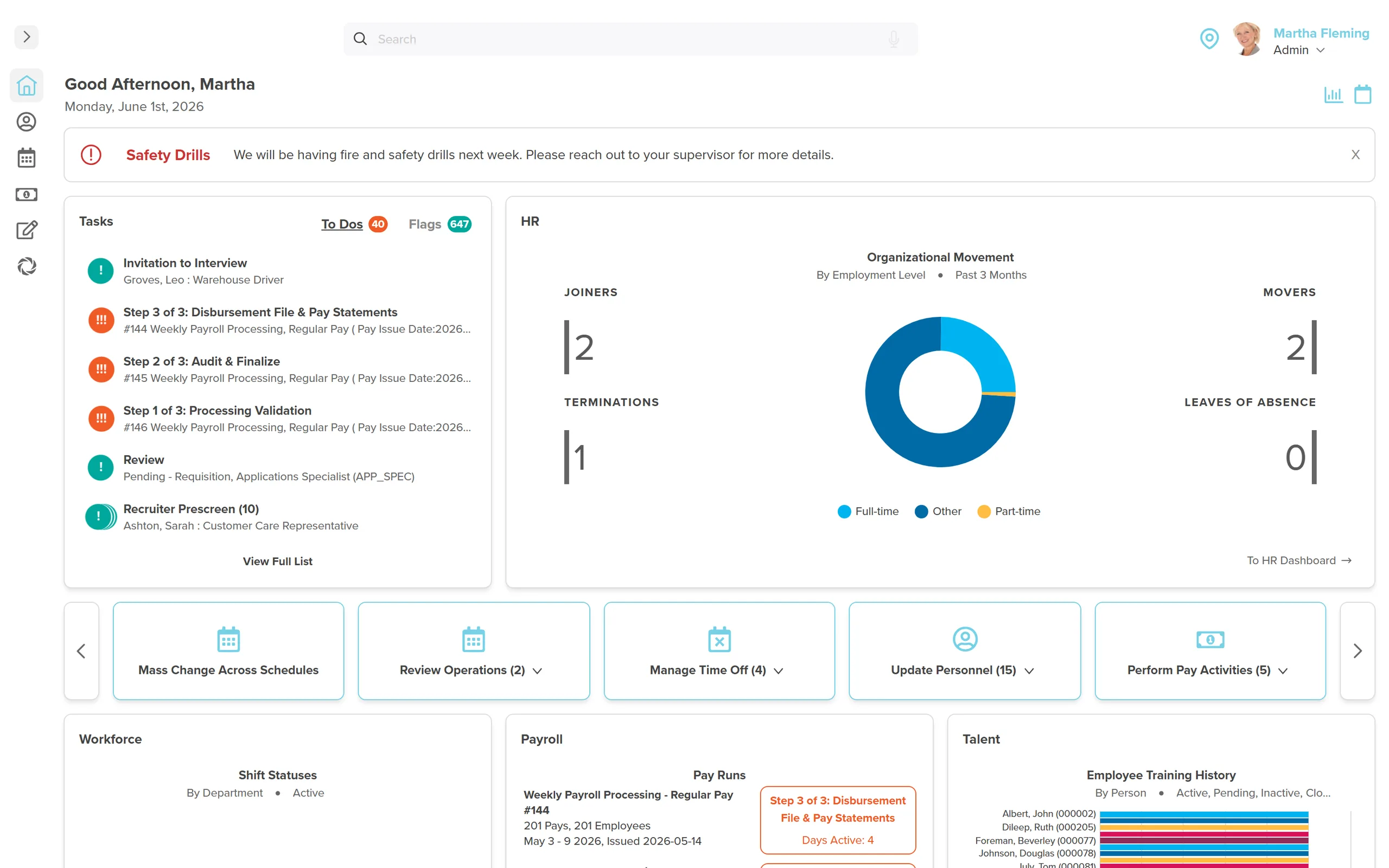
The lesson described in detail above has actually been reinforced several times in the ensuing years that I've been operating my independent industry analyst and advisor practice in HR tech. In fact, I believe having the strategic partner test on my radar when advising HCM / Payroll solution buyers has contributed to earning a spot on the annual Top 100 HR Tech Influencer list these last two years, especially when coupled with the takeaways I publish on LinkedIn regularly from the many solution providers I meet with year after year. This naturally affords me a superb opportunity to evaluate many vendor offerings AND approaches to working with customers. One of the HR Tech solution providers I met with in recent weeks is called Workzoom, based in Ontario, Canada. I came away from my initial meeting with the Workzoom team thinking this emerging HCM solution vendor, apparently on a nice market trajectory, not only lives by the "vendor as strategic partner" credo but seems to be extending it even further. Workzoom also effectively takes risk out of the all-important vendor selection decision by being one of a small group of players I'm aware of that allows prospective customers to try before they buy (so to speak, as it's a typical SaaS-based subscription pricing model). Additionally, I believe the combination of offering fully built out modules for complete HR / HCM process automation and stakeholder enablement, and leading with the strategic partner engagement model as a software vendor (when competitors are generally referring to other vendors filling product gaps as their strategic partners, not their customers) should make Workzoom a candidate for inclusion in many organizations' HCM / Payroll software vendor selection process.
Of course, I'd also want to see and discuss product roadmaps and surrounding 'customer input' and R&D prioritization processes with all solution vendors considered. While what is within the platform now should always take precedence as you want usage and therefore ROI to be strong out of the gate, don't forget to also bring up the vendor's priorities over the next 18 to 24 months. After all, no SMB or mid-sized customer wants their vendor partner's future focus areas to be hijacked by the next large prospect that comes along.
In closing, I'll cite the research of my good friends at Sapient Insights, who in my opinion, publish the best and most reliable Customer Satisfaction research in this industry every single year. From their most recent report: "HR Teams in many companies are growing increasingly dissatisfied with their current HR Software vendors, despite the many benefits they provide." This finding was the result of interviews with over 2,500 small, medium, and large-sized organizations. Perhaps the above discussion signals a likely correlation.
And for anyone interested in learning more about the solution provider mentioned here, you can follow this link: workzoom.com
See Workzoom in 30 minutes.
Real product, real questions, no slides. Starts at $4 per employee per month, CAD or USD, with $0 setup fees.
Our clients
The teams that run their people on Workzoom.













Workzoom handles HR, payroll, workforce, and talent on one employee record. Book a 30-minute walkthrough.