 Canada
 United States
 Bahamas
 Jamaica
 Trinidad & Tobago
 Antigua & Barbuda
 Barbados
 Anguilla
Ontario Pay Equity Act Section 7(1): Do You Owe a Review?

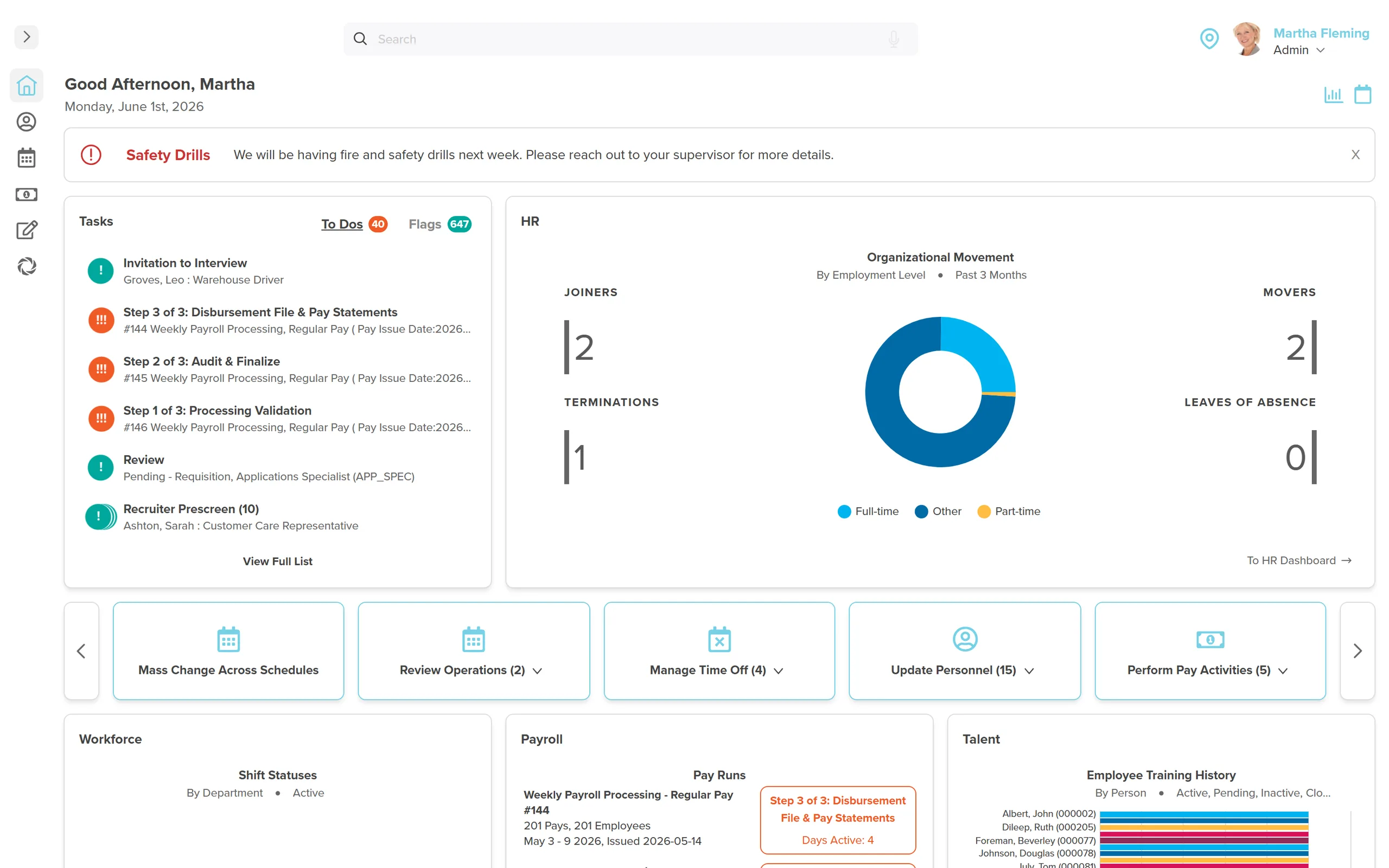
A plan filed years ago does not, by itself, demonstrate that pay equity has been maintained. Check changes to jobs and compensation against the continuing Ontario obligation.
Under Ontario's Pay Equity Act, maintaining pay equity is a continuous duty under Section 7(1), not a one-time filing. The Pay Equity Office's own guidance calls for reviewing your plan regularly, whenever job duties, compensation, or classifications change. If your organization achieved pay equity through the proxy method, because you had no internal male comparator job class, you have to keep comparing against proxy male job classes going forward. That's the standard set by the Ontario Court of Appeal's 2021 ruling in Participating Nursing Homes v. Ontario.
The maintenance review is the piece almost every broader public sector employer has quietly missed.
Here's the part that stings: it's usually not the HR team's fault. Nobody handed you a renewal notice. The Act sets an ongoing duty in Section 7(1) but doesn't hand you a fixed cycle, a reminder email, or a form to resubmit. So the plan gets filed, the binder goes on a shelf, and fifteen years pass. You inherited a gap, not a failure.
- Section 7(1) of the Pay Equity Act creates an ongoing maintenance duty, not a one-time filing requirement.
- The Pay Equity Office recommends reviewing your plan regularly, whenever job duties, compensation, or classifications change, not on a fixed annual cycle.
- Employers using the proxy method must keep comparing to proxy male job classes indefinitely, per Participating Nursing Homes v. Ontario (2021) and Glen Hill Terrace Christian Homes Inc v CUPE (2016).
- Employers must direct the lesser of 1% of the prior year's payroll or the amount left to close the gap toward pay equity adjustments annually, until equity is achieved (Section 8).
- Proxy eligibility is limited by the statutory Appendix and historical conditions, including having employees on July 1, 1993. An organization type or lack of male comparators alone does not establish eligibility.
The Filing Isn't the Finish Line
Women aged 25 to 54 in Canada earn 89 cents for every dollar men earn (Statistics Canada, 2026). That gap is exactly what pay equity legislation was built to close, and it's why the Act doesn't let you close the file after one plan.
You're not failing at compliance. Your process is. Most HR functions inherited a binder from a predecessor, assumed the job was done, and moved on to the next fire. The Act was never designed that way. Section 7(1) requires an employer to establish and maintain compensation practices that provide for pay equity, and "maintain" is doing real legal work in that sentence.
That's the default state of most legacy pay equity plans across Ontario's broader public sector: filed once, years earlier, and never revisited.
When the Act Requires a Maintenance Review
The Act itself doesn't prescribe a fixed cycle. That's the honest, slightly frustrating answer. But the Pay Equity Office's own guidance and a growing body of tribunal decisions give you a real answer, not a shrug. Use this as an internal risk-screening checklist, not a statutory trigger, if any of these apply:
- Your original plan is more than a year old and hasn't been formally re-checked since.
- Job duties, classifications, or reporting structures have shifted since the plan was filed.
- New job classes were created, or old ones were merged or eliminated.
- Compensation structures changed through a new collective agreement or job evaluation.
- Your organization used the proxy method and has never revisited whether the proxy comparators are still valid.
These indicators help prioritize an internal review. Neither the number of indicators nor a plan's age by itself determines legal compliance. For a municipality, children's aid society, school board, or community living agency, an annual review lines up naturally with budget cycles and collective bargaining anyway.
Proxy Comparison When There's No Male Job to Measure Against
This is where most broader public sector employers get stuck. Fair enough, it's a genuinely hard spot. Job-to-job and proportional value comparisons both assume you have a male-dominated job class somewhere in your organization to measure a female-dominated class against. A lot of children's aid societies, school boards, and community living agencies simply don't have one. Nearly everyone is a caseworker, an educational assistant, or a support worker, and those roles skew female.
The proxy method exists for exactly this gap. It is available only to eligible public-sector employers meeting the statutory Appendix and historical conditions, and it works by borrowing a comparator job class from a different, similar public sector employer. Pay Equity Office, Introduction to Pay Equity.
| Method | When it applies | Ongoing obligation |
|---|---|---|
| Job-to-job | Internal male comparator job class exists at equal or lesser value | Re-check on every job or compensation change |
| Proportional value | No exact match, but multiple internal male job classes exist for a trend line | Recalculate when the male comparator set shifts |
| Proxy | Eligible Appendix employer meeting historical and statutory conditions for proxy use | Maintain pay equity using the legally applicable comparison method. Obtain advice before changing a proxy plan. |
What the Pay Equity Office Actually Wants to See
Section 8 of the Act requires employers to devote the lesser of 1% of the prior year's total payroll or the amount still needed to close the gap, toward pay equity adjustments every year until pay equity is achieved. If your organization never calculated that percentage, or hasn't recalculated it since job classes changed, that's a gap an internal audit or a Pay Equity Commission review will find fast.
What holds up under review isn't a memory of a decision made years ago. It's a dated record: the job evaluation scores, the comparator classes used, the adjustment calculations, and the date each was last touched. Most municipalities, children's aid societies, school boards, and community living agencies we talk to keep this in a compensation spreadsheet that one person understands, updated whenever someone remembers. That's not a maintenance system. That's a single point of failure with a due date nobody tracks.
The fix isn't more binders. It's a compensation record that carries its own history automatically: a job evaluation from three years ago and a step change from last month, sitting in the same place, dated, without anyone rebuilding a spreadsheet from memory. We turned the five internal review indicators above into a one-page checklist you can pull down at the end of this post, if you'd rather keep it at your desk than in your head.
Pay equity maintenance isn't a filing you finish. It's a record you keep current, the same way you keep position control or CUPE step progression current. Miss one review cycle, you're behind. Miss five, you're the compliance letter waiting to happen.
See how Workzoom keeps compensation history audit-ready
Workzoom's HR suite tracks date-effective job classifications, pay scale steps, and compensation history automatically. Starting at $4 per employee per month per suite. No setup fees, no contracts.
Tell Us What You Need to SeeSee Workzoom in 30 minutes.
Real product, real questions, no slides. Starts at $4 per employee per month, CAD or USD, with $0 setup fees.
What readers ask after this post on Ontario pay equity act.
Our clients
The teams that run their people on Workzoom.













Workzoom handles HR, payroll, workforce, and talent on one employee record. Book a 30-minute walkthrough.