 Canada
 United States
 Bahamas
 Jamaica
 Trinidad & Tobago
 Antigua & Barbuda
 Barbados
 Anguilla
Canada and the EU Are Getting Closer. Caribbean Employers Should Be Paying Attention.

Guest commentary by Mellissa Lezama, Attorney-at-Law and Founder and CEO of The HR Horizon. Originally published on LinkedIn on September 24, 2026 and republished here with her permission. Commentary as of September 2026.
Last week, European Commission President Ursula von der Leyen proposed an "Alliance for the Future" with Canada, covering technology, defence, energy, critical minerals and economic security. She even floated the idea of Canada becoming the EU's first "associate member." Back in March, the two launched negotiations on a digital trade agreement.
This builds on CETA, the trade deal that has already removed customs duties on 99% of goods traded between Canada and the EU. With relations between Canada and the United States strained, both sides are clearly moving closer, and quickly.
Most of the coverage has focused on what this means for Ottawa, Brussels and Washington. I want to look at it from where I sit, in the Caribbean, and from the angle I know best: what it means for employers and their people practices.
Our advantage in Canada is quietly shrinking
Most Commonwealth Caribbean exports enter Canada duty-free under CARIBCAN, a one-way arrangement Canada has offered since 1986. We don't have to cut duties on Canadian goods in return, and Canada has secured WTO approval to extend it to December 2033.
It has served us well. Trinidad and Tobago was the largest CARIBCAN exporter to Canada in 2021, with 98% of its exports, including methanol, rum and biscuits, entering duty-free.
But every deal Canada signs chips away at that advantage. European producers now sell into Canada on similar terms, often with bigger budgets and better-known brands. CARIBCAN also covers goods only, not services or investment. Talks on a full Canada–CARICOM trade agreement stalled in 2014, and while ministers met again in June this year, nothing new is on the table.
Preference erosion rarely makes headlines. It just shows up, slowly, in lost orders.
The part most employers are missing: labour standards
Modern trade agreements aren't just about tariffs. CETA commits both Canada and the EU to international labour standards, and European buyers in particular are under growing pressure to show that the businesses they source from treat workers fairly.
That pressure flows down the supply chain. A Caribbean supplier to a Canadian or European company can expect questions like these:
- Do all your employees have written contracts?
- Do you have documented disciplinary and grievance procedures, and do you follow them?
- What are your health and safety policies and records?
- Can you show fair pay, working hours and overtime practices?
- Is there a safe way for workers to raise concerns?
In my work with Caribbean employers, this is often where the gaps show. Policies live in someone's head, or in a handbook that hasn't been touched in years. That's manageable until a buyer's supplier questionnaire lands on your desk with a deadline attached.
If a major buyer asked to see your HR policies tomorrow, would you be comfortable sending them?
Services and data: the next frontier
The Canada–EU digital trade talks will likely set shared rules on data and digital services. That matters for the growing number of Caribbean businesses and professionals selling remote services to clients in either market, and remember, CARIBCAN gives us no preferential access for services at all.
We compete on quality, price and trust. Increasingly, trust includes how you handle personal data, including your own employees' data.
A Caribbean lens still matters
None of this means importing a North American or European HR playbook wholesale. Caribbean labour law, industrial relations traditions and workplace culture are distinct, and procedures that work in Toronto or Paris may not be compliant in Port of Spain or Kingston.
The task is to meet international expectations in a way that's lawful locally and workable for your people. International standards set the bar. Local law sets the rules. We have to satisfy both.
What I'd do now
- If you export to Canada, check you're actually claiming CARIBCAN treatment on every eligible shipment.
- Review your contracts, handbook and core HR policies. Are they written, current and followed?
- Put together a simple HR compliance pack you could share with a buyer at short notice.
- Look at how you handle employee and client personal data.
- Get local employment law advice before changing contracts or procedures.
The bottom line
The Canada–EU relationship won't change your business overnight, and some of what's been proposed may never happen. But the direction is clear: our trading partners are raising the bar, and that bar reaches us through buyers, investors and clients. The businesses that treat good people practices as a competitive advantage, rather than a box to tick, will be best placed.
I'd be interested to hear from other Caribbean business owners and HR leaders. Are you already seeing these expectations from overseas buyers?
If you're an exporter wondering where to start, I've put together a practical guide covering the nine areas overseas buyers check, what a supplier audit looks like, and a 10-point readiness checklist: HR Compliance for Caribbean Exporters: What Overseas Buyers Will Ask You.
Mellissa Lezama is an Attorney-at-Law, Global HR & Employment Law Specialist, and Founder & CEO of The HR Horizon. This article is general commentary, not legal advice.
Performance Management That Holds Up: A Playbook for HR and Business Leaders
Mellissa leads this live session on Tuesday November 24, 2026 at 11:00 AST (10:00 EST) on Microsoft Teams. It covers how Caribbean employers build a performance record that stands up when a decision is challenged, and the smallest version that works for a firm with no HR department.
Mellissa Lezama is an Attorney-at-Law, Global HR and Employment Law Specialist and Certified Mediator in Trinidad and Tobago. Through The HR Horizon she equips Caribbean startups and SMEs with the contracts, policies and performance frameworks to navigate the future of work. Follow her on LinkedIn.
Related reading on Workzoom
Our clients
The teams that run their people on Workzoom.













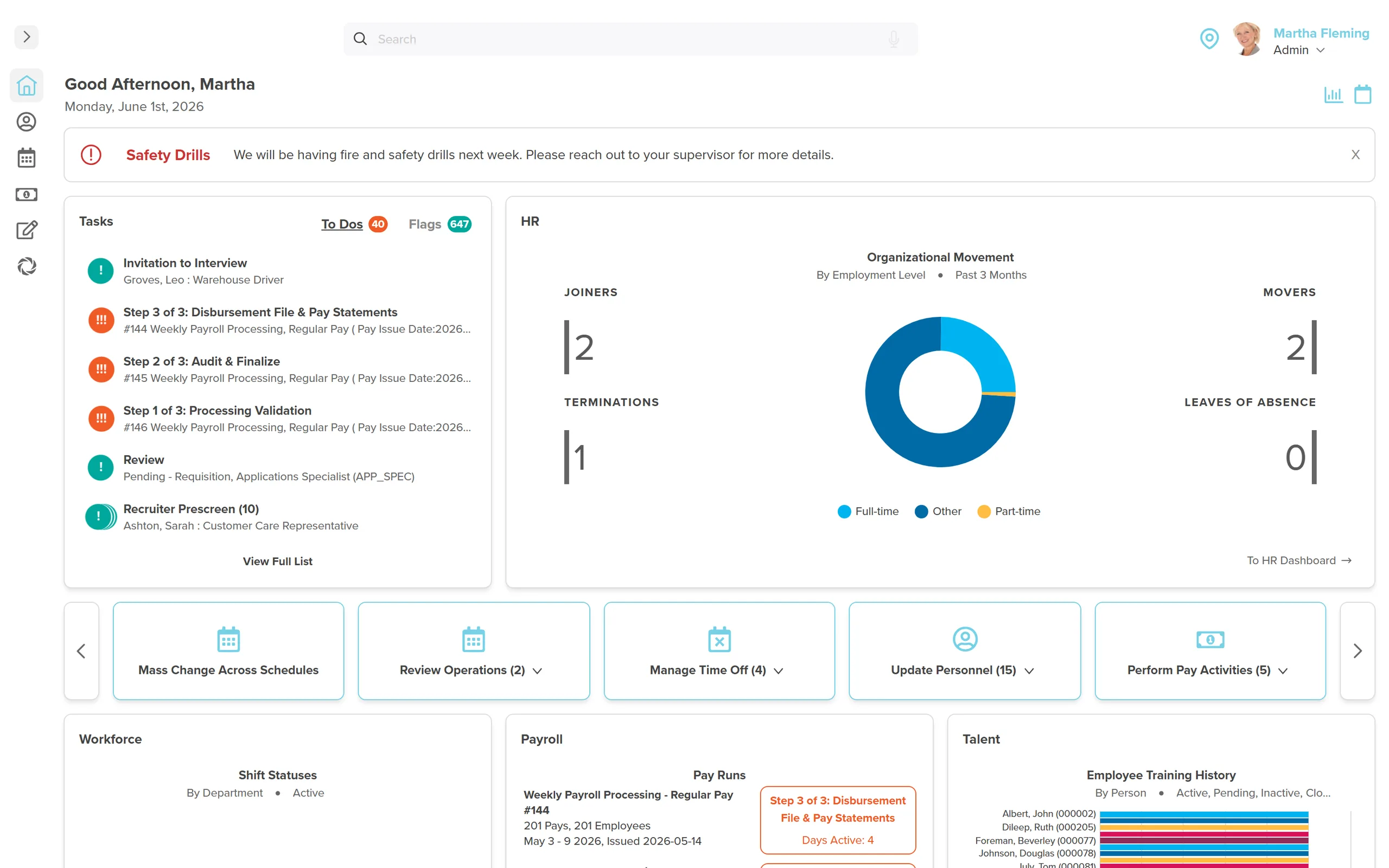
Workzoom handles HR, payroll, workforce, and talent on one employee record. Book a 30-minute walkthrough.