 Canada
 United States
 Bahamas
 Jamaica
 Trinidad & Tobago
 Antigua & Barbuda
 Barbados
 Anguilla
NIB Number Bahamas 2026: What the C10 Audit Checks

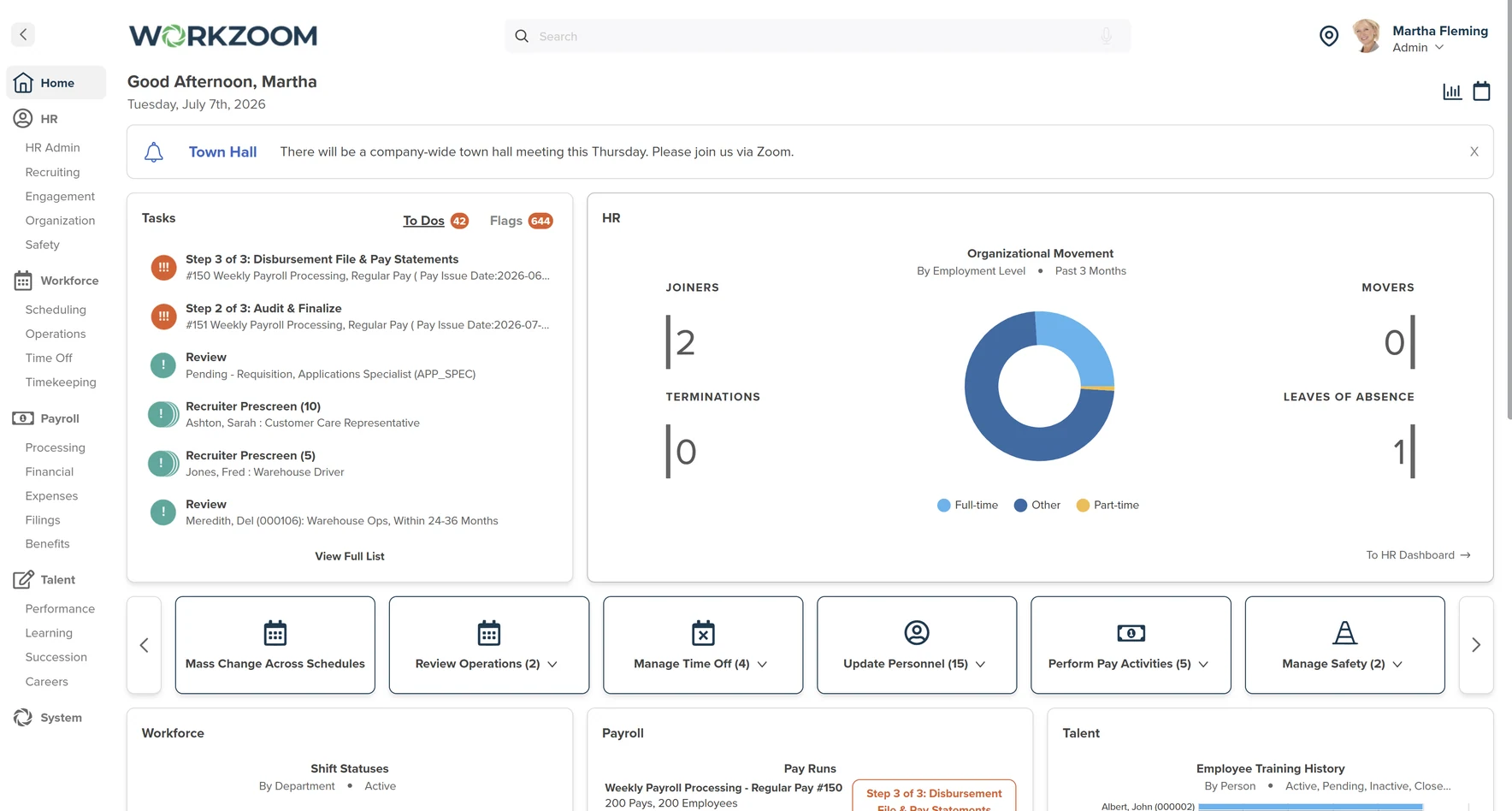
Most Employers Get the NIB Number Bahamas Process Wrong Without Knowing
Getting your NIB number in the Bahamas, registering as an employer, and staying current on C10 deadlines are the baseline. Running payroll in the Bahamas sounds straightforward until you actually do it.
On paper, it is simple. Calculate wages, apply NIB contributions, file your C10, pay your people. But in practice, the gap between "technically compliant" and "actually compliant" is where most Bahamian employers run into trouble.
Most employers don't fail the NIB math because the rates are hard. They fail it because they treat a monthly statutory filing like a once-a-month chore. That's not a paperwork problem. That's a payroll-engine problem, and it shows up the first time an audit checks your $42,120 ceiling tracking against twelve months of pay runs.
The National Insurance Board processes hundreds of millions of dollars in contributions each year across thousands of registered employers. A meaningful chunk of those employers are filing with spreadsheets, manual calculations, and a prayer that the math holds up under audit.
This guide covers what it actually takes to run compliant payroll in the Bahamas. Not the theoretical version. The version where you have employees across multiple islands, different pay schedules, and an NIB deadline every month that doesn't care about your workflow. For a broader look at Bahamian HR and payroll requirements, see our complete HR and payroll guide for the Bahamas.
NIB Contributions: The Numbers That Matter
Every employer in the Bahamas is required to register with the National Insurance Board and make contributions on behalf of their employees. This isn't optional, and the rates are non-negotiable. The current schedule took effect July 1, 2024.
NIB Contribution Rate Table
| Contributor | Rate | Weekly Maximum (at $830 ceiling) |
|---|---|---|
| Employer | 6.65% | $55.20 |
| Employee | 4.65% | $38.60 |
| Total | 11.3% | $93.80 |
| Self-employed (Class B) | 8.8% | $73.04 |
The maximum insurable wage ceiling is $830 per week since July 1, 2026, which works out to $43,160 per year; before that date it was $810 ($42,120 per year). Workzoom applied the new ceiling on the first pay run on or after July 1, 2026. Any earnings above the ceiling are not subject to NIB contributions, so for higher-paid employees, contribution amounts cap out at a fixed maximum.
Self-employed individuals pay 8.8% (Class B, which includes industrial injury coverage) or a lower Class A rate (without industrial coverage). Verify the current Class A rate at nib-bahamas.com/contributions before quoting it.
Where employers trip up: applying NIB contributions to gross pay instead of insurable earnings, miscalculating weekly ceilings for employees paid bi-weekly or monthly, or forgetting that overtime above the ceiling doesn't attract contributions.
Step-by-Step NIB Calculation Example
Take an employee earning $500 per week. That's below the $830 ceiling, so the full amount is insurable.
- Identify insurable earnings: $500/week (below the $830 ceiling, so fully insurable)
- Calculate employer contribution: $500 x 6.65% = $33.25
- Calculate employee contribution: $500 x 4.65% = $23.25
- Total NIB contribution for this employee: $33.25 + $23.25 = $56.50 per week
- Monthly cost to employer (assuming 4.33 weeks/month): approximately $143.97
Now consider an employee earning $900 per week. Only $830 is insurable.
- Insurable earnings: $830 (the ceiling, not $900)
- Employer contribution: $830 x 6.65% = $55.20
- Employee contribution: $830 x 4.65% = $38.60
- Total: $55.20 + $38.60 = $93.80 per week
This is the maximum anyone pays per week, regardless of how high the salary goes. Before July 1, 2026, the weekly cap was $91.53 against the old $810 ceiling. For a business with 100 employees averaging $600/week in insurable wages, the employer's annual NIB cost is roughly $207,000. That is a real line item, not a rounding error.
New Employer Registration: The 10-Working-Day Rule
Businesses and self-employed persons must register with the National Insurance Board within 10 working days of commencing operations. The deadline is tied to when operations begin, not to hiring a first employee.
Here is what you need to bring to the NIB office:
- Business licence
- Articles of incorporation (or partnership/sole proprietor documentation)
- A list of all employees with their full names, dates of birth, and NIB numbers (if they have them)
- Your business address and contact details
NIB will assign you an employer registration number. This number goes on every C10 form and every piece of correspondence with NIB. Lose it, and you are making phone calls nobody wants to make.
If your new employee does not have an NIB number, they need to apply for one. This involves a separate visit to NIB with their passport or birth certificate. As the employer, you cannot make contributions for someone without a valid NIB number, so do not delay this step.
The 10-working-day registration window is strict. Build employer registration into your opening checklist, not your "we'll get to it" list. Individual NIB registration follows a separate standard: before, or as soon as possible after, commencing employment.
The C10 Form: A Complete Walkthrough
The C10 is the document that keeps the National Insurance Board informed about your workforce. Every month, employers must file a C10 listing every employee, their insurable wages, and the contributions owed.
What the C10 Actually Asks For
The C10 form has columns for each of the following, per employee:
- Employee name (as registered with NIB)
- NIB number
- Number of weeks worked in the reporting month
- Total insurable earnings for the month (capped at the weekly ceiling times weeks worked)
- Employer contribution (6.65% of insurable earnings)
- Employee contribution (4.65% of insurable earnings)
- Total contribution per employee
At the bottom, you total everything up: total insurable wages, total employer contributions, total employee contributions, grand total payable to NIB.
How to Fill It Out Correctly
- List every active employee who worked during the month, even those who only worked part of the month
- Calculate insurable earnings per employee. If an employee earned above $810 in any week, cap that week at $810 (or $830 from July 1, 2026 forward). For a month with 4 complete weeks and an employee earning $900/week, insurable earnings are $810 x 4 = $3,240, not $900 x 4 = $3,600
- Apply the rates. Multiply each employee's total insurable earnings by 6.65% (employer) and 4.65% (employee)
- Include new hires. Even if they started mid-month, their earnings for the days/weeks worked must appear on the C10
- Remove separated employees. Only include wages up to their final working day. Do not include the full month if they left on the 12th.
- Sign and date the form. An unsigned C10 is treated as unfiled.
Deadlines and Penalties
Filing deadline: 15th of the following month. January wages are due on the C10 by February 15th. Payment must accompany the filing.
Let's do the math on what late filing actually costs. Say your total NIB contributions for the month are $15,000 and you miss the deadline by 3 months.
- Confirm the balance: Reconcile the unpaid contributions with NIB.
- Confirm the assessment: Ask NIB to confirm interest and any other amount assessed for the affected period.
- Correct the record: Preserve the pay-period detail that supports the correction.
That compounds. For persistent non-compliance, NIB has authority to prosecute under the National Insurance Act. Fines can reach $5,000, and in serious cases, imprisonment is on the table. NIB also publishes defaulter lists, which is exactly the kind of public attention no business wants.
The Legal Framework Behind NIB
NIB operates under the National Insurance Act, which is administered by the National Insurance Board. The Bahamas Government portal publishes the legislative framework and links to NIB's mandate. The rate schedule and C10 requirements are published directly by NIB (nib-bahamas.com). Verify current rates at the source before finalizing any payroll configuration, since NIB reviews the insurable ceiling periodically.
Workzoom calculates and prepares NIB contribution data for each pay run. The employer submits contributions to NIB. The platform handles the arithmetic, generates contribution schedules, and flags the ceiling change on July 1, 2026. Filing is the employer's obligation.
What NIB Provides Your Employees
Those contributions are more than a compliance exercise. They fund real benefits that your employees rely on. Understanding what NIB covers helps you explain deductions to employees, which matters when someone looks at their pay stub and asks why $23.25 is missing every week.
Sickness Benefit
Employees who cannot work due to illness receive income replacement from NIB for up to 40 weeks. The benefit is roughly 60% of average insurable earnings. Employees need at least 40 weekly contributions to qualify, with 13 paid in the last 26 weeks before the claim.
Maternity Benefit
Eligible mothers receive 13 weeks of maternity benefit. The contribution threshold mirrors sickness benefit: 50 contributions total, with at least 26 in the year before the expected delivery date. This benefit is paid directly by NIB, not by the employer.
Invalidity Benefit
For employees who become permanently incapable of work before reaching retirement age. Requires at least 150 weekly contributions, with a specific number paid in the relevant period. This converts to a retirement pension when the employee reaches 65.
Retirement Pension
Payable from age 65 with at least 150 weekly contributions. The pension amount depends on the employee's contribution history and average insurable earnings. Employees can also qualify for a reduced pension at age 60 under certain conditions.
Survivors' Benefit
Paid to dependants (spouse, children) of a deceased insured person. The deceased must have met the same contribution requirements as for retirement pension.
Industrial Injury Benefits
Covers workplace accidents and occupational diseases. Unlike other benefits, industrial injury does not require a minimum number of contributions. If an employee is injured on the job from day one, they are covered. This is why self-employed individuals pay a lower rate, since they are excluded from industrial injury coverage.
Funeral Benefit
A lump-sum payment toward burial costs when an insured person or their dependant dies. The amount is fixed by NIB and updated periodically.
When employees ask "where does my NIB money go?" you should be able to answer that clearly. These benefits are the social safety net of the Bahamas, and your contributions are what fund them. For more on the broader employment framework that sits alongside NIB, see our guide to the Bahamas Employment Act.
NHI: The Newer Layer of Compliance
The National Health Insurance Authority (NHI) adds another dimension to employer obligations in the Bahamas. While NHI is primarily funded through general taxation rather than a separate payroll deduction, employers still have compliance responsibilities.
What employers need to know about NHI in the Bahamas:
- Registration: All employers must register with the NHI Authority
- Employee enrolment: Employers must ensure all eligible employees are enrolled in NHI
- Record-keeping: Maintain accurate records of employee eligibility status
- Reporting: Comply with NHI information requests and audits
NHI coverage in the Bahamas is expanding in phases. Primary care, including doctor visits, lab tests, and prescription drugs, is covered. The long-term plan includes specialist care and hospital services. Employers need to stay current with NHI requirements as the programme evolves, because the compliance goalposts are still moving.
The Multi-Island Problem
Here is where Bahamian payroll gets genuinely complicated.
The Bahamas has over 700 islands, and any business operating across multiple locations deals with logistical challenges that most payroll systems weren't designed for.
- Different work schedules across locations (tourism-heavy islands have different peak seasons)
- Variable overtime rules depending on the nature of operations
- Banking logistics for islands with limited banking infrastructure
- Communication delays when collecting timesheets from remote locations
Cable Bahamas operates across multiple islands with 850 employees. Before automating their payroll, the process took 5 full days every pay period. Five days of a payroll team manually collecting data, calculating contributions, cross-referencing timesheets, and hoping nothing got lost between Grand Bahama and Nassau.
Island Luck faces an even more complex scenario: 850 employees across 60+ gaming locations, running 8 separate payrolls every week. Weekly employees, bi-weekly employees, monthly salaried staff. All with different schedules, different overtime calculations, and all requiring the same NIB compliance on every single pay run.
For more on scheduling and workforce logistics across the islands, see our workforce management guide for the Bahamas.
What Most Employers Actually Get Wrong
After working with Bahamian employers for over a decade, the compliance gaps tend to cluster around the same issues. This is the pattern we see across our Bahamian payroll base: the failures are rarely exotic, and they repeat.
1. Misclassifying employees vs. contractors
If someone works set hours, uses your equipment, and reports to your manager, they are an employee regardless of what the contract says. NIB takes worker classification seriously, and misclassification triggers a statutory obligation to remit back contributions, with penalties.
2. Incorrect ceiling calculations for bi-weekly and monthly pay
The NIB ceiling is expressed as a weekly amount ($810 through June 30, 2026, then $830). Converting that for bi-weekly ($1,620, rising to $1,660) or monthly ($3,510, rising to $3,597) pay periods requires precision. Getting this wrong means over-contributing or under-contributing, both of which create problems on audit.
3. Not tracking employees who hit the annual ceiling mid-year
Once an employee's insurable earnings hit $42,120 for the year (rising to $43,160 from July 1, 2026), contributions should stop. Many manual payroll processes continue deducting because no one is tracking the running total.
4. Late registration of new hires
Individuals in gainful employment should register with NIB before, or as soon as possible after, commencing employment. In practice, especially in hospitality and gaming where turnover is high, new hires can slip through the registration process and only surface when there is an incident or audit.
5. Poor record-keeping for separation
When employees leave, their final pay calculation must include any outstanding NIB obligations. Incomplete separation records create mismatches between your C10 filings and your actual workforce.
6. Forgetting that benefits require contribution thresholds
If you under-report or miss contributions for an employee, you risk a fine and could disqualify that employee from sickness, maternity, or retirement benefits. When an employee files a claim and NIB finds a gap in their contribution record, the employer is the one who hears about it.
What Compliant Bahamian Payroll Looks Like
If you are running payroll properly in the Bahamas, here is what should be happening every pay period without exception:
- Insurable earnings calculated correctly for each employee based on their pay frequency, with ceiling applied
- NIB contributions split properly between employer (6.65%) and employee (4.65%) portions
- Running annual totals tracked per employee to stop contributions at the $42,120 ceiling (rising to $43,160 from July 1, 2026)
- Bank files generated for direct deposit across all island locations
- C10 data compiled automatically from the same pay run data (not re-entered manually)
- Pay stubs issued showing gross pay, NIB deductions, and net pay
- Audit trail maintained for every calculation, adjustment, and payment
- New hire NIB registration tracked as part of onboarding, before or as soon as possible after the start date
When any of these steps involves a spreadsheet, a manual calculation, or a separate data entry, you have introduced a point of failure. Unpaid contributions can accrue statutory interest, so those failure points are inefficient and expensive.
Handle Bahamas NIB and C10 compliance without the manual work
Workzoom automates NIB calculations, compiles C10 contribution schedule data from each pay run, processes multi-island payroll, and produces bank files for Bahamian employers. Starting at $4/employee/month with no setup fees, no contracts.
See How It WorksThe Bottom Line
Payroll in the Bahamas isn't technically difficult. The NIB rates are published. The C10 deadlines are fixed. The rules are clear.
What makes it hard is the execution. Calculating contributions correctly for every employee, every pay period, across every location. Filing on time, every month. Tracking annual ceilings. Making sure employer and individual NIB registration happen on the right timetable. Keeping up with NHI requirements as they evolve.
The employers who get this right aren't the ones with the biggest payroll teams. They are the ones who stopped treating payroll as a manual process. Cable Bahamas runs payroll for 850 people with 3 staff members. Island Luck processes 8 payrolls a week across 60+ locations.
Both stopped relying on spreadsheets. Both stopped worrying about C10 deadlines. Both got their payroll processing down to a fraction of what it used to take.
The shift is treating your NIB filing as something the system produces from a single pay run, as opposed to something a person rebuilds by hand every month. The rates don't reward the team that works harder. They reward the team that stopped doing it by hand.
The math doesn't change. The question is whether you are still doing it by hand.
- National Insurance Act, Ch. 350, ss. 54-55 claim checked Sep 9, 2026
See Workzoom in 30 minutes.
Real product, real questions, no slides. Starts at $4 per employee per month, CAD or USD, with $0 setup fees.
What readers ask after this post on NIB number Bahamas.
Our clients
The teams that run their people on Workzoom.













Workzoom handles HR, payroll, workforce, and talent on one employee record. Book a 30-minute walkthrough.