 Canada
 United States
 Bahamas
 Jamaica
 Trinidad & Tobago
 Antigua & Barbuda
 Barbados
 Anguilla











Payroll runs seamlessly, and HR processes are no longer a tedious grind. It's simplified how we work, allowing us to focus more on our people.
Move someone once and the chart, the headcount, and the approval chain all redraw themselves.
4.5 stars on G2 + Capterra. 50 third-party reviews.1
25+ years in production. Since 2000.2
100% in-house support. Never farmed out.14
$4 per employee / month / suite.3
The short answer
Workzoom org chart software, also called position management software, defines job profiles, departments, work sites, positions, and reporting hierarchies inside the HRIS. It turns that org chart into automation: it drives recruiting requisitions, payroll cost centres, scheduling assignments, and approval routing across every module. Because position management is part of the HRIS rather than a separate visualization tool, the chart is always live, headcount is tied to real positions, and a reorganization updates every connected workflow, supporting succession and workforce planning at once. Workzoom organization software is built for employers with 50 to 5,000 employees.
Our clients
Approval routing, cost centers, and reporting lines are configured separately in each tool. A reorg means updating the same change in five places, and they drift apart immediately.
Workzoom Organization defines departments, positions, and reporting lines once. A single change propagates automatically to approvals, payroll cost centers, scheduling, and reviews.
Every Workzoom suite shares the same employee data, so organization stays current with payroll, HR, workforce, and talent without an export or an integration to maintain.
Departments, positions, and reporting lines defined once in Organization drive approval routing, payroll cost centers, scheduling, and performance reviews across every module. A single change here propagates automatically so nothing falls out of sync.
Position management keeps roles visible in the org chart even when no one is filling them. FTE limits, cost center mappings, and career paths stay intact so headcount planning and recruiting happen from real data, not spreadsheet estimates.
Workplace safety incidents, injuries, and WCB tracking live in the same system as your org structure and employee records. Incident patterns analyze by department and location automatically because the data is already connected.
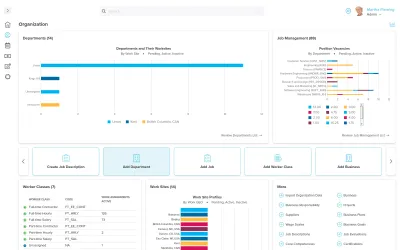
Workzoom lets you define your organizational structure once and every connected module builds from it. Approval routing, payroll cost centers, scheduling assignments, and performance review chains all reference the same hierarchy automatically.
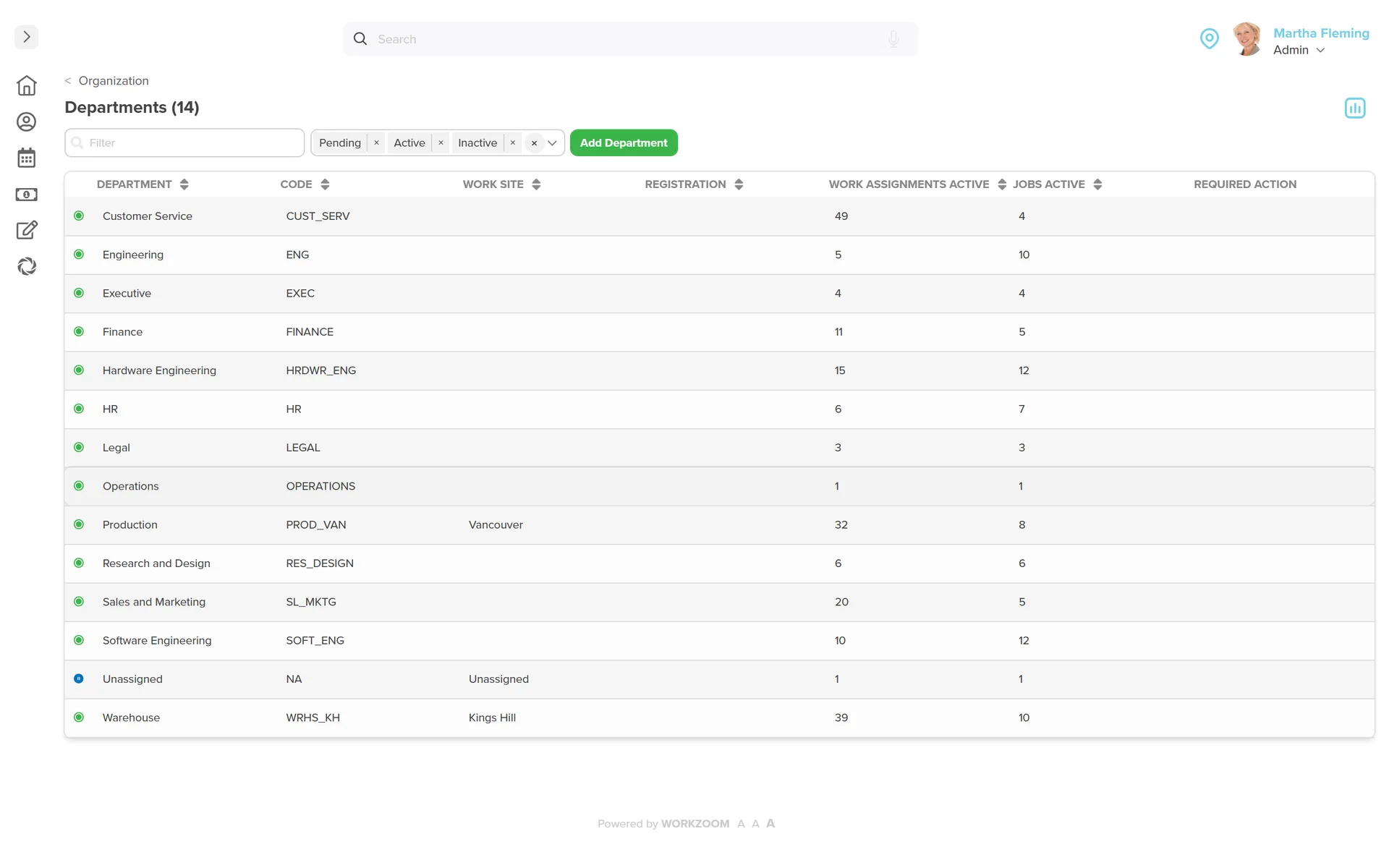
Workzoom tracks positions independent of people so that when someone leaves, the role stays visible in the org chart with its FTE limits, cost center mapping, and career path intact. Recruiting creates requisitions directly from open positions.
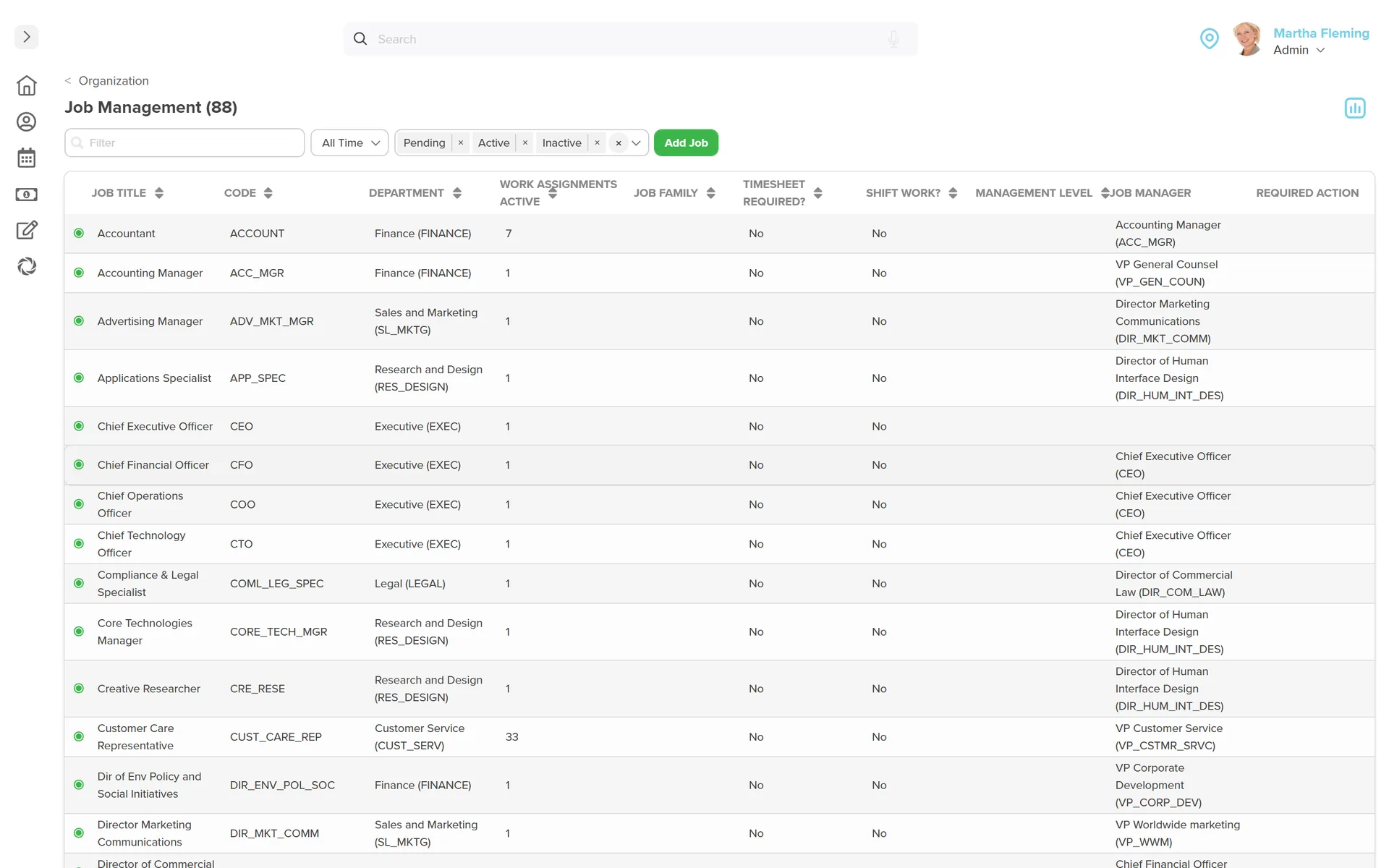
Workzoom routes time-off requests, expense approvals, and requisitions based on the reporting lines defined in Organization. When someone transfers or a manager changes, every approval workflow updates automatically without any manual reconfiguration.
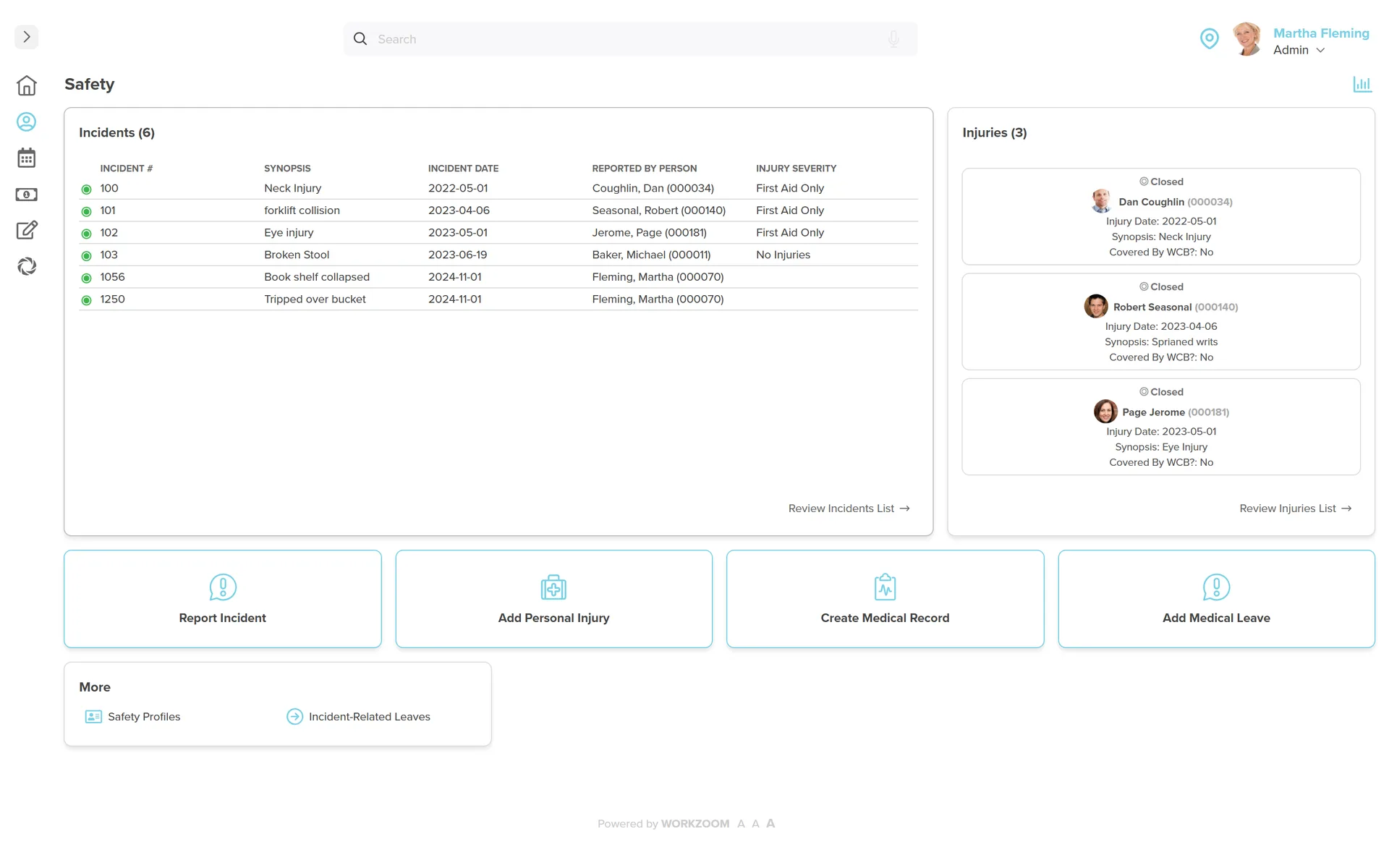
Workzoom includes workplace safety incident tracking connected directly to your org structure. Record incidents with full context, track injuries with WCB coverage status, and manage safety committee membership, all without a separate EHS tool.
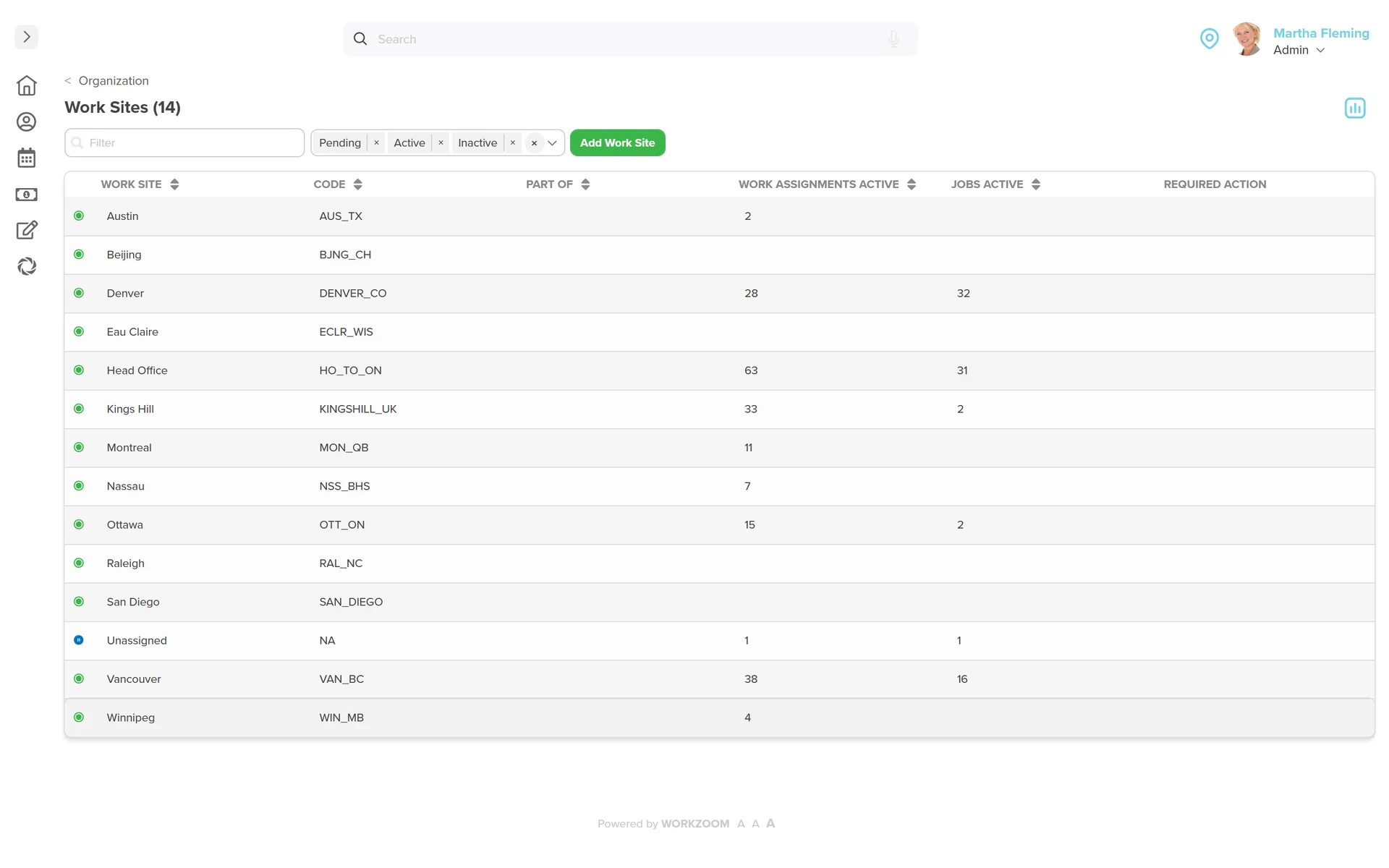
Workzoom supports separate businesses as distinct legal entities within a single platform, each with its own hierarchy, departments, work locations, and policies. Driving Change Automotive Group (DCAG) uses this to run its dealerships across Saskatchewan and Alberta, where each location keeps its own structure while leadership sees the full picture.
Customer stories
Teams running Workzoom organization on real payroll, real schedules, real headcount. View all case studies
Payroll runs seamlessly, and HR processes are no longer a tedious grind. It's simplified how we work, allowing us to focus more on our people.

Before Workzoom, we were buried in spreadsheets. Now HR is so much simpler. We spend less time on admin and more time supporting our staff and residents every single day.

What mattered most was choosing a solution built for businesses like ours. Workzoom delivered everything we needed, from payroll to facial recognition clocks, and worked with us every step.


We would not be able to hire the way we do with the same resources. It has kept our headcount consistent without growing it, saving us time and money every single cycle.
Workzoom completely transformed our payroll process in just one month. So easy to audit, validate, and make corrections, even at the last minute. The support we received was incredible.
Moving to Workzoom was the right move. It gave our dynamic report and payment structures the flexibility we needed, at the right price.

Switching to Workzoom made managing payroll and timekeeping so much easier. We processed our first payroll faster than we expected and now feel far more confident in everything we do.
Keep exploring
Pair Organization with the rest of the HR Suite. One employee record, nothing to integrate or maintain.
The full employee lifecycle, application to termination, on a date-effective record that also runs payroll and scheduling. Change once, never re-key.
One employee record that drives HR, payroll, scheduling, and talent. Every job and pay change is kept with its real effective date, never overwritten.
The candidate you hire becomes an employee automatically: offer, onboarding, and first payroll off the same record, with no re-keying.
Workzoom is $4 USD per suite per employee per month, or $16 all-in for the full platform. No setup fees, no long-term contract. See pricing.
Get started
A 15 to 60 minute working session, not a slide deck. We walk through Organization live, on your headcount and your industry, then give you a straight answer on fit and price.
Workzoom works with organizations of 50 or more employees. See our minimums.
Frequently asked
Specifics on how Workzoom organization works, what it costs, and how it connects to the rest of the platform.